This sermon was preached at St Swithun’s Church, Sandy on Sunday 15th May 2022.
Reading: Mark 2:23 – 3:6
Introduction
Good morning and thank you for welcoming me to St Swithun’s. I’m grateful for the invite from Phil and Huw to join you here this morning. I am excited for this opportunity to share what God has been putting on my heart.
You might have guessed from the reading this morning that our focus this morning is on the Sabbath. I think most of us would have heard of the sabbath, but in reality, it is something that is not spoken of greatly in modern day Britain.
The sabbath is old, really old. The sabbath stretches back to the beginning of creation. In Genesis 2, after God has made the heavens and the earth and all of creation in six days, it says:
And on the seventh day God finished the work that he had done, and he rested on the seventh day from all the work that he had done. So God blessed the seventh day and hallowed it, because on it God rested from all the work that he had done in creation.
Genesis 2:2-5 [NRSV].
The sabbath is a day set aside for rest. After six days of work comes a day for rest given by God. In fact, God told the Israelites in the Ten Commandments to keep the sabbath. He says:
Remember the sabbath day, and keep it holy. For six days you shall labour and do all your work. But the seventh day is a sabbath to the Lord your God; you shall not do any work—you, your son or your daughter, your male or female slave, your livestock, or the alien resident in your towns. For in six days the Lord made heaven and earth, the sea, and all that is in them, but rested the seventh day; therefore the Lord blessed the sabbath day and consecrated it.
Exodus 20:8-11 [NRSV].
This is something that God has asked us to do. To remember the sabbath day, to remember it as a day of rest, and we do it as an act of love and honour to God, as we set aside this sabbath day for him. God has asked us to rest on the sabbath day and consecrated, that is to bless it as a special and holy day.

Story
I don’t know how many of you have kids, but I’m sure some of you can resonate with the child who comes up to their parent and asks them for something. It could be asking for money, a new phone, or help with their homework. It’s a joy to be asked, but at the same time you live in fear of what they might ask for. Let me tell you of one dad who shared such a fear.
One day this dad’s teenage son come up to him, and his son says, ‘Dad, please can I have a car?’
‘Why do you need a car?’ the dad asks.
The son was clearly prepared for this and gave a long list of reasons why having a car would be beneficial for him. How he would be able to take himself around without ask for lifts from mum and dad, how it would increase his sense of responsibility, and how it will be good for him to practice driving on his own having just got his full driving license. I can see some of your faces suggesting that you have had the same thing happen to you as well.
The father could see the logic to his son’s argument and felt he made a compelling argument. He was prepared to come an agreement with his son. ‘Son, I will get you a car, but I ask three things of you in return. First, I want you to stop slacking on your chores and keep up with helping around the house. After all, if you are responsible enough to drive, then surely you are responsible enough to do your chores. Second, I want you to stop messing around at school and focus on your schoolwork and take responsibility for your education. And finally, I want you to cut your long hair so that it looks smart and tidy. Do we have a deal?’
The son said yes and shook hands with his dad straight away. ‘New car here I come.’
A few months passed by before the son went back to his dad and said, ‘Dad, I have done what you asked, and so can I please now have a car as you promised?’
The dad said, ‘I’ve been impressed by you these past few months. You have been doing all of your chores and helping around the house. You have also been working hard at school and your grades have picked up. Well done. But there is one other thing you are forgetting. The third thing I asked you to do was for you to cut your hair. However, you have not cut your hair, if anything, it is now longer than before. So no car I’m afraid, son.’
‘Well, dad, I thought about this and I figured that it was a good biblical thing to do as a Christian.
‘Really?’ said the dad. ‘How so?’
‘Well dad, I was reading about men in the Bible and many of them had long hair. Abraham had long hair. Moses had long hair. Even Jesus had long hair.’
The dad looked at his son and smiled. ‘Yes, son, you are right. Abraham had long hair. Moses had long hair. And Jesus too had long hair. But they also walked everywhere.’
A Faster Pace Than God
I know this is just a silly story, but it’s important to recognise that many of us are trying to move faster in life than Jesus himself was going. I’m not just talking about transport. Many of us can feel that we are running around trying work through our endless list of things to do. Things with work, family and church never seem to stop. It’s just the nature of modern life. I need to go at this speed in order to stay on top of these things. You talk about this ‘sabbath’ we as Christians are supposed to take, but honestly it is just not realistic in this modern world. Jesus might have moved at walking speed, but I don’t have the time to go that slow.

Just think about that for a second. We genuinely believe that following Jesus and moving at his speed is not possible for us. Jesus, your way is not good enough for us, it just doesn’t work for us. Are we genuinely saying that to God?
Sabbath is therefore essentially two things. It’s a day of rest and a day of worship. We worship together here at church, but I also believe that God created space for us to worship in our rest. We worship God as we set our lives with God’s rhythm. These two markers are the best thing to ask ourselves about how we use spend our sabbaths. Are we doing things that are rest and things that are worship?
The Japanese theologian Kosuke Koyama in his famous 1969 book ‘Three Mile an Hour God,’ reminds us that God’s speed, the speed of love and all that is good is slow, slower than the speed at which the rest of the world is forcing us to go.
I think God knew that this need to go at full speed all the time was a real risk for people, which is why God instituted the sabbath since the beginning of creation. God, the all-powerful and complete being who created the world chose to rest on the sabbath day. Unlike us, surely God could work to the max 24/7. But this is the penny drop moment: God could work 24/7, but he doesn’t. He could be going non-stop, but he doesn’t. And there must be a reason why.
The reason is because of us. God stopped on the seventh day to sabbath for us. We heard in our reading that Jesus said, ‘The sabbath was made for man, not man for the sabbath’ (Mark 2:27). God instituted a day of rest at the beginning of creation because he knew that we needed rest as part of our week. We need rest as part of our rhythm of life. This rhythm of sabbath is part of God’s own rhythm. As we rest on the sabbath, we are joining in God’s speed for the week, the speed which God has picked out and designed as the perfect rhythm for humanity.
Finding our sabbath
So this leads us to ask ourselves, ‘so how do we find our sabbath in our modern world?’
When finding our sabbath it is essential to remember that the sabbath is made for us, not the other way around. God didn’t create the sabbath as a rule that we had to obey for the sake of the rule. Rather God created the sabbath for us, as a rule of life, a discipline that improves our lives, and brings us closer to the good life that God has for us. Sabbath helps us to walk in step with God.
This is what the Pharisees seemed to have forgot about sabbath. They criticise Jesus and his disciples for picking grain (which is a form of work) and therefore breaks the law of the sabbath, but they fail to recognise that this is less about work and more about replenishment in their time of need. Jesus reminded them of how David and his companions broke the law because they were hungry and in need. But what Jesus tries to stress is that these laws were about helping us and replenishing us. They were about drawing us to God and his ways for our lives. When Jesus’ disciples pick grain, yes, they are breaking the sabbath law, but they are in keeping with God’s desire to meet our needs and replenish us. Same with when Jesus healed on the sabbath, yes, it was a form of work and against the sabbath law, but it was in keeping with drawing close to God and his will to heal and replenish us.
The laws, the sabbath were created to help us, not for us to serve these laws and rules for their own sake. So we should see the sabbath not as some annoying rule we have to keep, but rather as a chance and a tool to grow closer to God. The sabbath is a day for when we are in need, and God meets our need on the sabbath. God takes our hearts which are distressed and angered like the Pharisees, and uses sabbath to relieve our hearts.
A sabbath day is a day of rest in the week. In the modern world we cannot all ensure that it is a Sunday as many have done in the past. That is okay, and I think Jesus affirming his disciples picking grain for food tells us that Jesus is flexible with how the sabbath is used, as long as we are using it for rest and renewal. So whether we take a Sunday as sabbath, or a Saturday, or a Friday as I do, what matters is that a day of the week is used as a sabbath rest.
Now a sabbath is more than just a day off from work or school to do all the other things in the week. I’m talking to the adults especially, the sabbath is not a day for doing all the non-work related jobs. It’s rest, complete rest. A day when all the other things can wait as we rest. God rested on the sabbath, and if someone as important as the God of the universe can take time to rest, than we can definitely take time to rest. In fact, we need to take this time to rest. The sabbath is a day of resting, resting like God did, and learning to rest with God. The Jewish sabbaths in the bible were centred around worship. Sunday, the traditional sabbath day for many Christians, is a day of going to church for worship.
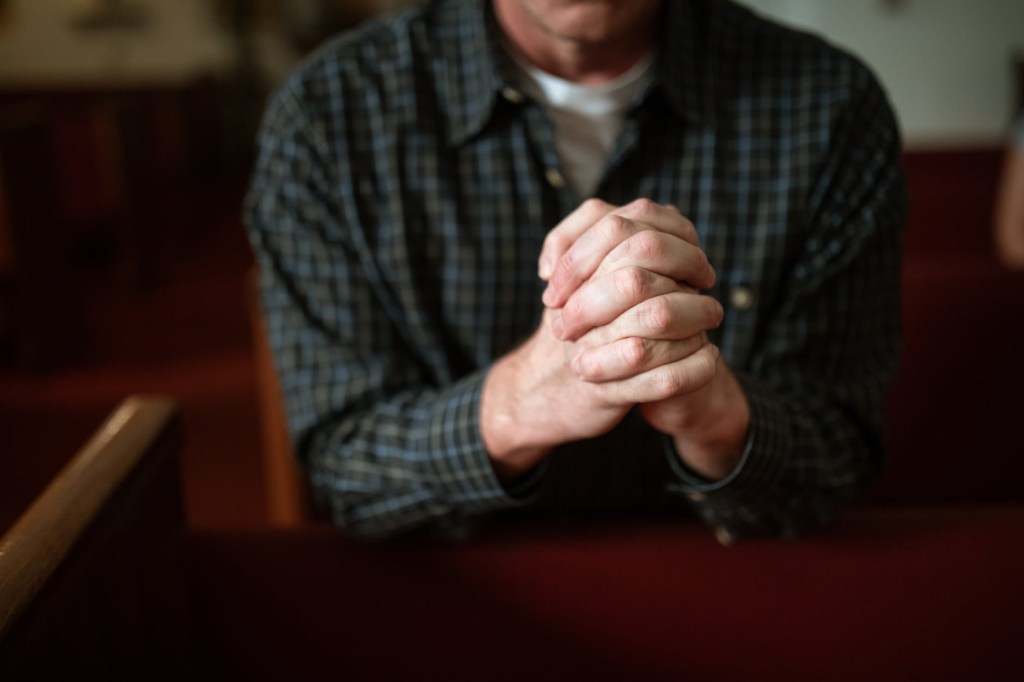
Are we worshiping God at church? Are we worshiping him at home in love and fellowship with others? Are we resting from work and jobs and to do lists? Are we resting from distractions like our phones and technology that stop us from properly switching off and resting?
When we use sabbath to rest and worship, we find ourselves drawn to God and his speed of life. As we move in step with God’s speed, we move at the pace of life which is best for us, the pace that is healthiest for us and sustains us in our day to day. It’s the rest that energises us like sleep for the next day. Old Testament professor Walter Brüggemann says ‘People who keep sabbath live all seven days differently.’ Sabbath is our bedtime that changes how we live not just the next day but the whole week. It changes our lives for the better, that we may better walk with God and the life he has for us.
Amen.
If you have been enjoying my content, then sign up to my new newsletter to enjoy my latest content in your inbox and more.
 Shakeel Nurmahi