This sermon was preached on Sunday 24th March 2024 at All Saints Church Oakham and St Peter and St Paul Church Langham.
Reading: Mark 11:1-11
Who do you believe Jesus is? You might say, well, he is Jesus, duh. Or you might say he is the Son of God. Or you might say something else. It could be easy to say that these are trivial questions but on this day of Palm Sunday, they are at the height of their importance.
Today marks the start of Holy Week, the final week leading up to Jesus’ death on Good Friday. Today sets the tone for the week we are about to enter into as we remember Jesus’ week leading up to the Cross, which we sometimes call his Passion.

I asked you at the start ‘Who do you believe Jesus is?’ Why? Because who you believe he is, impacts the way you treat him. Or in other words, how you treat Jesus shows what you think of him. It’s normal, isn’t it? Look at the crowds who turned up in their thousands to welcome and celebrate King Charles on his coronation day as he processed through London. Yet the homeless man walking down the street got no celebration, no notice or acknowledgement. We treat people differently based on who we believe they are.
If you look at the crowds on Palm Sunday as Jesus came into Jerusalem, you can see that they are excited. They praised Jesus and welcomed him like a king into the city, saying ‘Blessed is the coming kingdom of our ancestor David.’ They believe that he was coming in the same power, might and kingly authority and status as the great king David (who of course was Jesus great, great, great, and a few more greats grandfather). You can see that the crowd’s belief of Jesus impacted how they treated him.
The crowd are also shouting ‘hosanna.’ The word ‘hosanna’ means ‘help,’ or ‘save, I pray.’ It is a Hebrew word used as a shout of praise. It comes from Psalm 118:25 and therefore the word ‘hosanna’ was used as part of the Jewish worship. Therefore, hosanna was a word greatly familiar to the people.[i] Psalm 118 is a Psalm of victory and praise. It praises God for his goodness and his steadfast love and how God delivers Israel from its enemies. It would be reasonable to think that the crowd had some of these same thoughts as they shouted ‘hosanna’ as Jesus entered Jerusalem. Here was the saviour that God had given to the Jews to save and rescue them. The crowd praised and welcomed their saviour.
To the crowds, Jesus was a king, he was the promised saviour; he was the one who will bring victory over the Roman Empire that oppressed them. Many thought that because Jesus was a king and the saviour for the Jews against the Romans, Jesus would also be a great military leader, otherwise how else could you defeat the greatest military power the world had ever seen? The crowds had all these beliefs about Jesus and welcomed him in a manner fitting for a king and a saviour. They laid their coats and clothes on the ground so that Jesus and his donkey did not have to walk upon the dusty road. They waved palm leaves as a form of praise and celebration. They shouted ‘hosanna’ as a cry of belief and a cry for help. They believed that Jesus is the one who will save them.
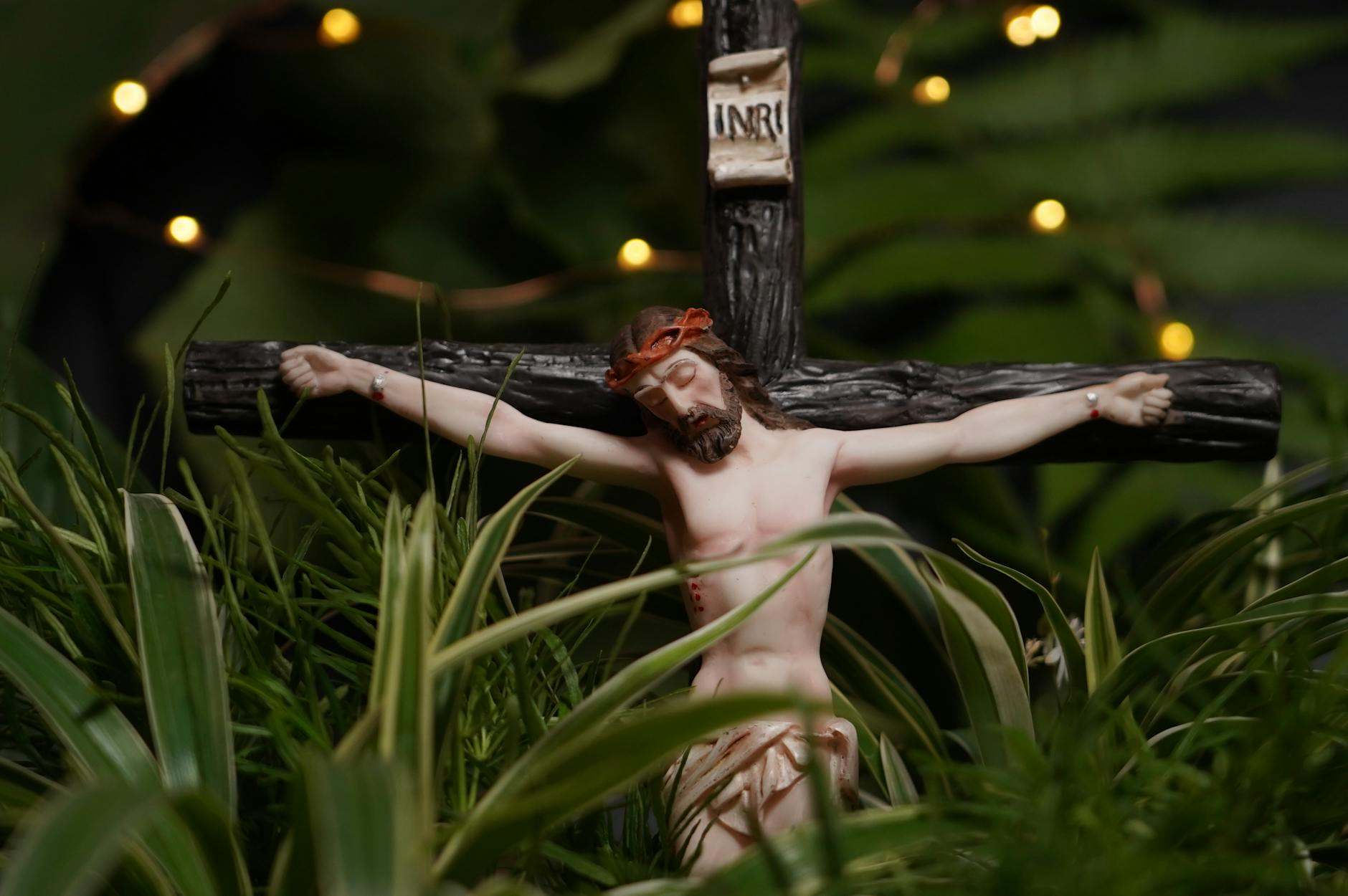
It’s quite astonishing to think how only a few days later, this same Jerusalem crowd was calling for Jesus’ crucifixion. What changed for them? Why did they lose the hope and belief in Jesus they had on his arrival? As we will see as we go through Holy Week, Jesus did not turn out to be the king and saviour that they hoped he would be. Yes, he was always acting as the king and the saviour, but not as the crowd expected him to act. He was the king who became the servant to wash his disciples’ feet, he was the saviour that was captured and was being executed. How could this person be the mighty king, saviour, and military ruler that they had believed and hoped for at the start of the week? In the end, they lost their hope and belief in who Jesus is. This man can’t be the king or the saviour, otherwise, he wouldn’t be on the cross, dying and losing the fight.
But we know that Jesus was acting as the King and Saviour in what he did on the cross, but to the crowds it was hard to understand it and believe it. And this week or as we look at the Passion of Christ, you too might have similar thoughts or moments of confusion. Jesus, how does this all add up? Why did you have to die? More widely in our Christian lives we ask God, surely this can’t be your way, surely this isn’t right? I think my way might be better for you and everyone. These are questions and thoughts that we will journey with this week, and I pray that God will be speaking to you about all these things on your heart across the week.
I asked you at the start, who do you believe Jesus is? Do you believe like the crowds that he is the king and the saviour? If so, do you act like you believe it? Do you get excited about Jesus’ arrival into your lives? Do you praise and worship him? Do you celebrate his power to save and ask him to come and save you from the sin in your life? Do you humble yourself before him and lay down what you have to honour him? The crowds on Palm Sunday did this. But are we doing this today?

Across Holy Week we see how the crowds lose heart in Jesus and by the end of the week they turn against him because he is not the person they thought he was. And no, he wasn’t, and as a result they crucified him. But if they looked past their own desires, they would see that Jesus was the king and saviour they believed he was, just in a different way.
Jesus is the same king and saviour to us. But will we push past our own moments of confusion, doubt and conflictions, our own desires for him to see him for who he really is? Remember, our actions reflect our beliefs, as the crowd on Palm Sunday so clearly showed. So, I ask who do you believe that Jesus is? And I also ask, does your life and actions reflect that belief? I hope that this Palm Sunday we are can be inspired to see Jesus as who he is and welcome his as our king and our saviour.
Amen.
If you have been enjoying my content, then sign up to my new newsletter to enjoy my latest content in your inbox and more.
[i] Frederick W. Danker and Walter Bauer, A Greek-English lexicon of the New Testament and other early Christian literature, 3. ed (Chicago: University of Chicago Press, 2000), 1106.
 Shakeel Nurmahi